
The 5 Types of Labradors: Understanding Purpose, Pedigree and Temperament
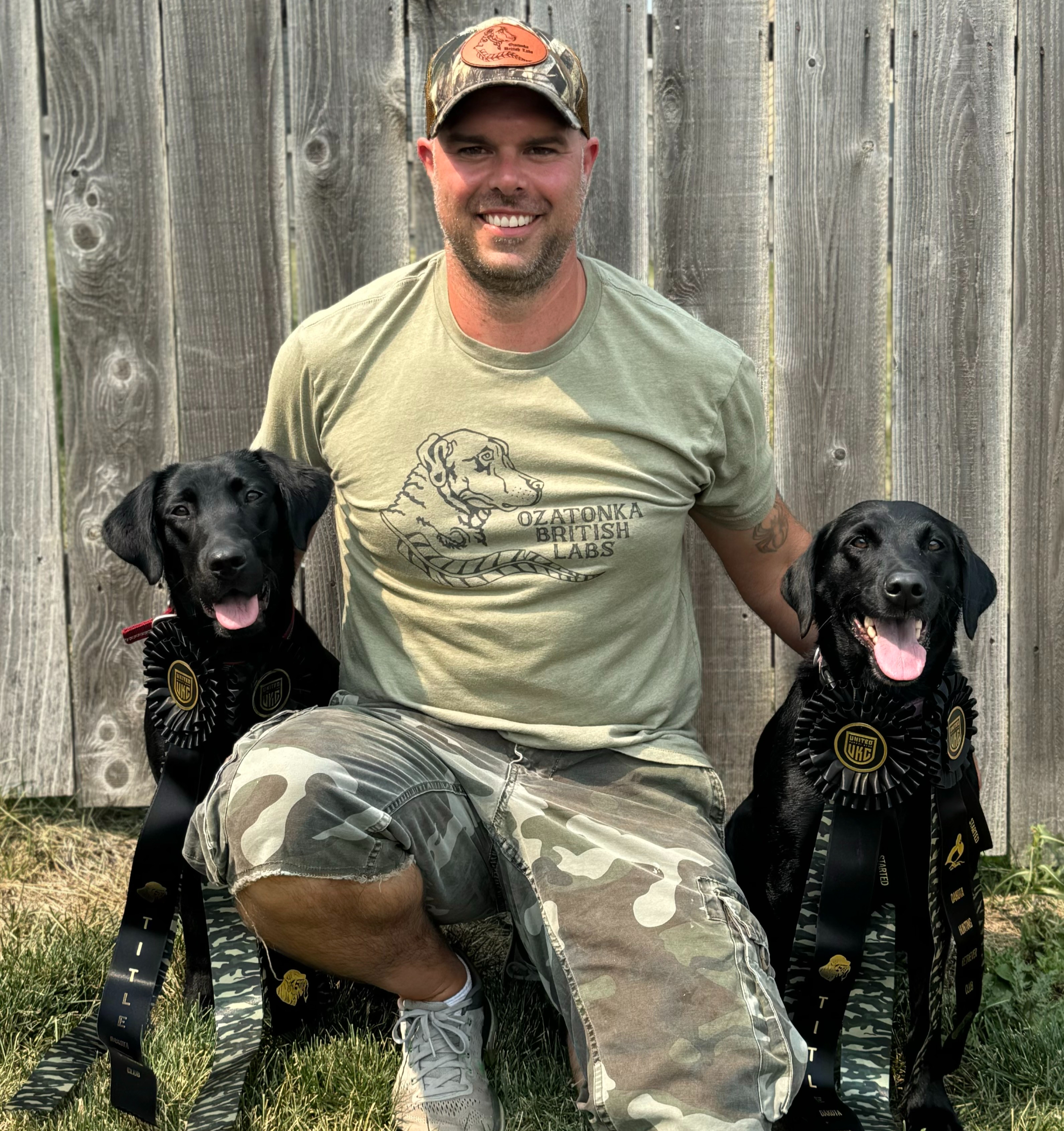
If you’ve spent any time looking for a Labrador puppy, you already know that a Lab isn't just a Lab. Decades of selective breeding for completely different jobs—from conformation show rings and high-stakes field trial circuits to duck blinds and simple pet market sales—have split the breed into five distinct categories.
For families and hunters across Minnesota and the Midwest, understanding how these lines differ is the best way to pick a dog with the right energy level, healthy genetics, predictable bird drive, and a temperament that actually fits your household.
1. Backyard-Bred Labradors
Backyard breeding happens when someone pairs two dogs simply because they’re purebred, nearby, or belong to a friend. There’s no pedigree research, no health testing, and no real breeding goal behind the litter.
Because there is zero selective breeding involved, these dogs don't have a consistent look or build, and their temperaments are hard to predict. In the field, their hunting drive is a complete toss-up—some might show an interest in birds, while others lack natural marking ability, show weak water entry, or struggle with gun-shyness.
More importantly, backyard breeders skip genetic disease screening and orthopedic testing entirely. Without health clearances on the parents, you run a high risk of bringing home a puppy prone to hip or elbow dysplasia, heart defects, dilute gene mutations, or crippling genetic conditions like Exercise-Induced Collapse (EIC) and Progressive Retinal Atrophy (PRA).
2. Pet-Bred Labradors
People often point to pet-bred Labs and call them "English" or "American" based on a quick glance, but that labeling misses the mark. Pet-bred Labs are their own separate category—dogs bred strictly for the pet market without performance titles, hunting history, or show standards behind them.
Calling a dog "American" just because it was born in the U.S. tells you nothing about its actual pedigree or working drive. Pet-bred lines are an unvetted mix of traits, usually with no working titles on either side. A puppy from one of these litters might grow up tall and lean, short and blocky, high-strung, or lazy. In the field, one pup might have decent prey drive while its littermate has zero interest in birds.
While the AKC requires "DNA on file" for heavily used stud dogs, that's just parentage tracking—it isn't health screening. Many pet breeders rely on basic vet checks while skipping complete DNA disease panels, heart checks, or certified joint clearances (OFA or PennHIP). Without deliberate line-breeding, temperament, health, and hunting drive vary wildly from one puppy to the next.
3. Show-Bred Labradors (Conformation / Bench)
Bred to match the written AKC breed standard, show-line Labradors are built for the ring. These are heavy-boned, stocky dogs with broad heads, deep chests, thick "otter" tails, and calm, sensible temperaments that make them steady family companions.
In the field, good show lines often hold onto plenty of natural retrieving instinct, and it’s common to see them earning hunt test titles (JH, SH, MH). They make reliable waterfowlers for hunters who want a classic, heavy-set Lab. However, their stockier frame prioritizes breed standards over high-speed agility, meaning they move slower and tire quicker in heavy upland cover compared to field-bred lines. Ethical show breeders test their stock thoroughly, clearing parent dogs through full DNA disease panels, OFA or PennHIP hips, OFA elbows, OFA Cardiac, and annual OFA eye exams.
4. Field-Type Labradors (US Field Trial & Hunt Test Lines)
American field-line Labradors are built for high-stakes competition, 300-yard blind retrieves, and sheer athleticism. Open up their pedigrees and you’ll find them stacked with titles like FC, AFC, and Master Hunter (MH).
Physically, these dogs are tall, lean, and light-boned—engineered for speed, big water entries, and covering massive amounts of ground. They have explosive retrieving drive, relentless bird-finding ability, and sharp intelligence. Responsible field breeders test heavily, clearing their parent stock with complete DNA disease panels, OFA or PennHIP hips, OFA elbows, OFA Cardiac, and OFA Eyes.
A lot of field-line Labs have great "off-switches" and make affectionate, deeply loyal family companions. But because their drive and enthusiasm run so high, managing that energy at home or in the duck blind requires consistent physical outlets, structured training, and an experienced handler. They thrive best in active homes where they have a real job to do.
5. British & Irish Field Labradors
Bred under strict European Field Trial rules, British and Irish field lines are selected for quiet composure, natural bird-finding ability, and gentleness both in the house and under working conditions. Their pedigrees feature proven Field Trial Champions (FTCH) and Field Trial Winners (FTW).
Unlike American field trials that reward extreme speed and long blind retrieves, UK and Irish trials require dogs to sit off-leash, dead silent, for hours during driven shoots alongside other handlers and working dogs. Any whining, barking, or breaking on shot results in an immediate disqualification. In the field, they hunt close, use the wind instinctively, and handle waterfowl marshes or upland cover with quiet efficiency.
In Great Britain and Ireland, breeding stock goes through rigorous British Veterinary Association (BVA) health schemes for hip, elbow, and eye clearances, along with full DNA disease panels. When imported to the States, ethical breeders evaluate them again using complete DNA disease panels, PennHIP or OFA for hips, and OFA for elbows, heart, and eye clearances.
The result is a versatile dog with a moderate, athletic frame—lighter than heavy show lines, but stockier and calmer than high-strung American field lines. They are famous for an effortless indoor "off-switch," soft biddability, and steady patience around kids, making them equally suited as calm family companions and driven hunting partners.
Which Type Fits Your Home?
Backyard-Bred: Unchecked breeding with no health testing or pedigree standards. Unpredictable temperament and unreliable hunting drive.
Pet-Bred: Unvetted mix of traits. Highly variable in build, energy, health screening, and bird instinct.
Show-Bred: Stocky, traditional build with calm energy. Great family dog with natural retrieving instinct, though slower in heavy upland cover.
Field-Type (US): Lean, high-drive athletes built for speed, distance, and competition. Requires an experienced handler and an active workload.
British / Irish Field Lab: Moderate, athletic build with a calm disposition, quiet steadiness in the blind, and an effortless indoor off-switch. Ideal for both active families and hunters.
The Standard at Ozatonka British Labs
If you want the calm temperament and natural hunting ability of working European lines, Ozatonka British Labs in Easton, Minnesota breeds imported British and Irish field trial bloodlines specifically for Midwest families and hunters.
Whether you're looking for Fox Red British Labradors or traditional Black British Labradors, their breeding program prioritizes working drive alongside total health transparency. Every dog in the Ozatonka program carries certified BVA background clearances from imported stock and undergoes complete US health testing, including:
Complete DNA Genetic Panels: Screening for Centronuclear Myopathy (CNM), Exercise-Induced Collapse (EIC), Hereditary Nasal Parakeratosis (HNPK), Macular Corneal Dystrophy (MCD), Myotubular Myopathy 1 (MTM1), Progressive Retinal Atrophy (PRA-prcd), Retinal Dysplasia / Oculoskeletal Dysplasia 1 (RD/OSD), and Dilute coat gene clearance.
Joint & Organ Clearances: PennHIP or OFA hip evaluation, OFA elbow clearances, OFA Cardiac, and annual OFA eye exams.
Proven Pedigrees: Lineage backed directly by verified Field Trial Champions (FTCH).
Whether you need a steady duck dog for frozen Minnesota water, a close-working upland retriever for pheasants, or an easygoing companion for your living room, purpose-bred British and Irish lines give you clear predictability across the board.
You can view their upcoming British Lab litters to see planned breeding pairs, or fill out their online puppy application to reserve a spot on their deposit list.

Comments